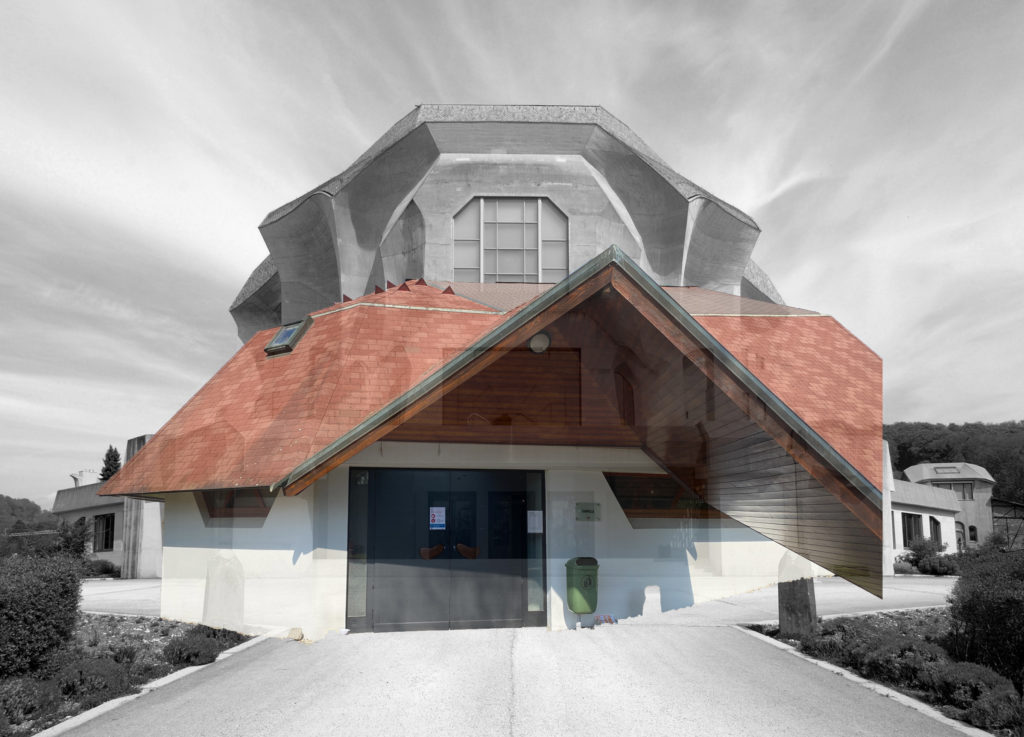
The Aigues-Vertes Foundation was created in 1961 by relatives and friends of people with intellectual disabilities and anthroposophists. We then decided to understand the philosophy: the anthroposophy.
Let’s start with the etymology, Anthroposophy : Anthropo: Human, Sophia: wisdom.
As simple as this sounds, it is the philosophy of the human., Its founder, Rodolf Steiner describes it as the existence of an objective, intellectually comprehensible spiritual world, accessible to human experience.
This philosophy caught our attention, because the location we chose is next to the chapel that is still here after all the years that passed by, it is the only trace of this philosophy in the village, a palimpsest as André Corboz would describe it.
This philosophy has developed a new way of creating spaces, a new architecture: the organic architecture.
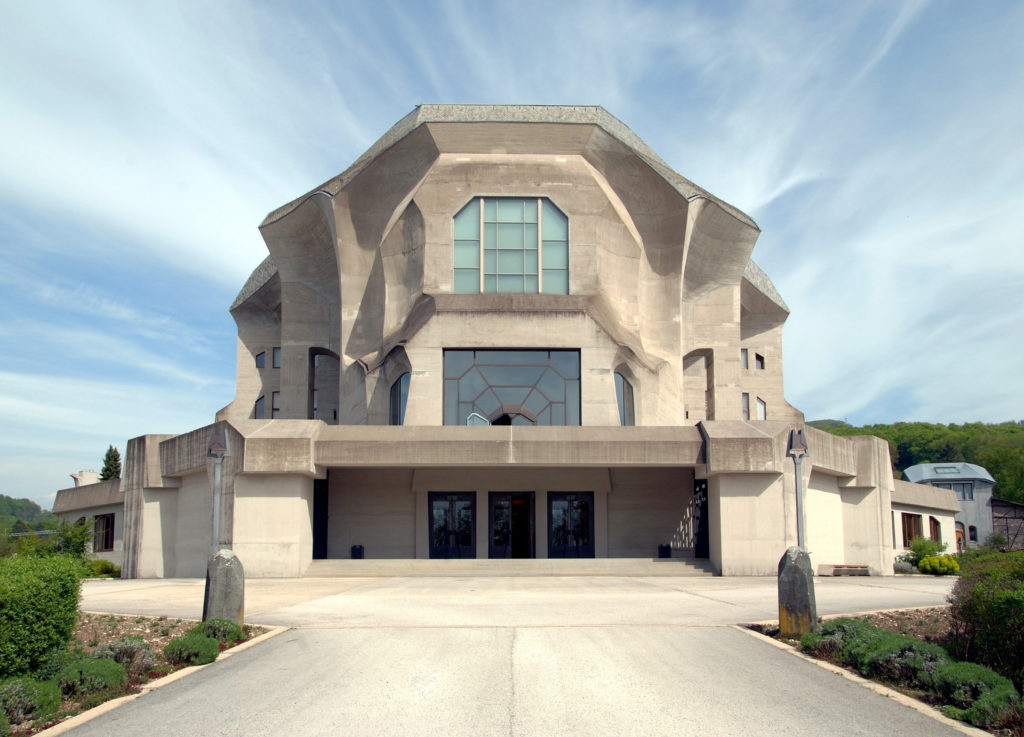
The term organic architecture embraces a colourful variety of architectural approaches and expressions which developed in different places at the beginning of the 20th century. Pioneers such as Frank Lloyd Wright, Antoni Gaudí and Rudolf Steiner drew, each in their own way, inspiration from the principles of living nature. This often led to free and expressive forms. These where not meant as an imitation of nature, but to support people as living and creative beings.
Within the organic movement, architecture is not only seen as an expression of culture and society, but also as something that influences the inner and outer lives of people. In this sense, the human being is seen as a physical, psychological and spiritual entity, connected to its surroundings at all these levels.
At a time in which architecture is largely dominated by economics, technical possibilities and regulations, organic architecture strives for an integral approach that also comprises ecological aspects, cultural meaning and spirituality.